The Master Guide to Streaming True 4K UHD Content with Polu TV
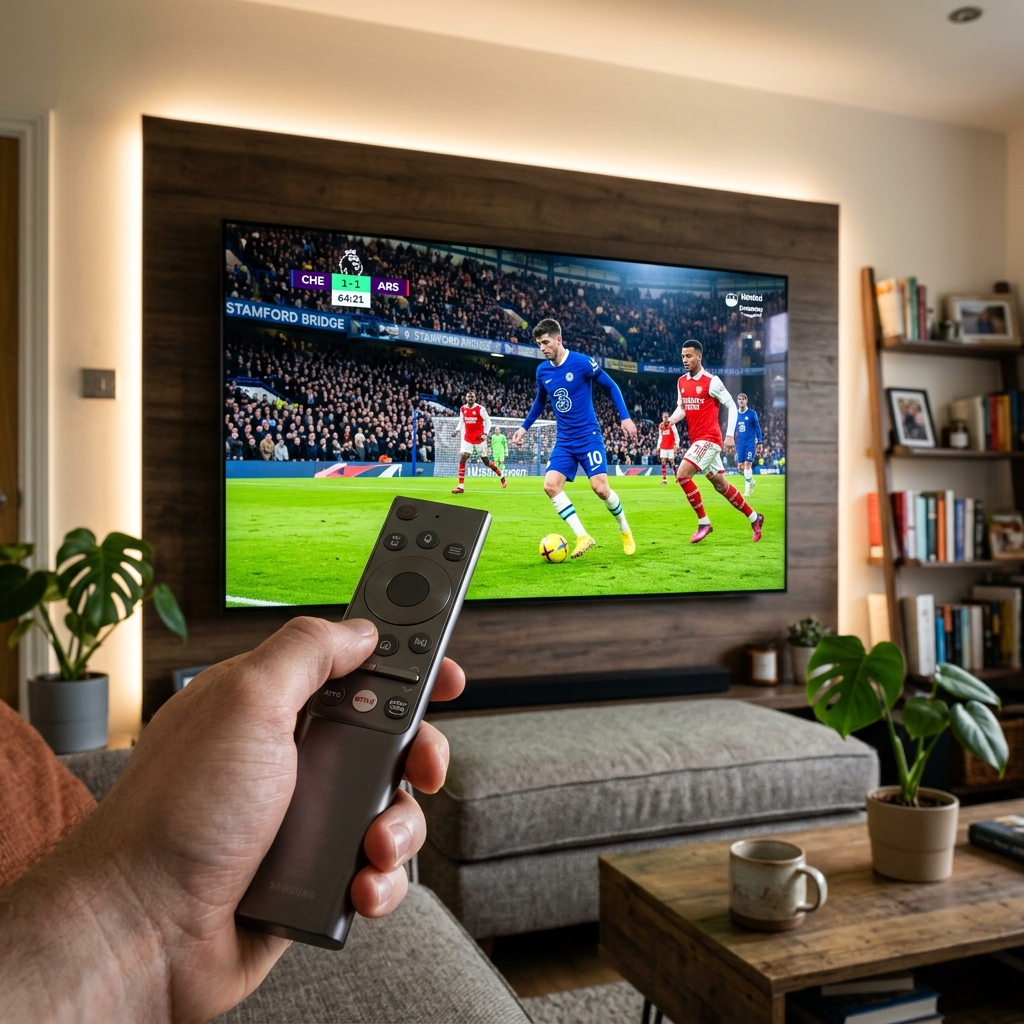
Modern 4K OLED, QLED, and Mini-LED televisions feature breathtaking visual capabilities, boasting 3840x2160 pixel grids, wide color gamuts (DCI-P3), and high dynamic range (HDR10 and Dolby Vision) rendering. However, the vast majority of streaming consumers are severely underserved by traditional broadcast cable and satellite providers that continue to transmit heavily compressed 720p or interlaced 1080i signals. To unlock the true potential of your high-end display, streaming with Polu TV delivers uncompromised 4K Ultra-HD television.
Achieving genuine 4K resolution at high frame rates (60 frames per second) requires an end-to-end engineering pipeline—from source camera transcoders and multi-gigabit Content Delivery Networks (CDNs) down to your home router's packet buffers and television hardware decoders. Understanding this technical chain guarantees you enjoy cinema-grade entertainment without compression artifacts or stuttering.
In this comprehensive 2026 4K streaming manual, our video compression architects dissect the codecs powering Ultra-HD broadcasts, outline exact bandwidth and network requirements, and provide step-by-step display calibration instructions tailored for Polu TV.
1. Video Compression Standards: H.264 (AVC) vs. H.265 (HEVC) vs. AV1
Raw uncompressed 4K video requires over 12 Gbps of throughput—an impractical data volume for residential internet infrastructure. Therefore, sophisticated mathematical compression algorithms (codecs) compress video frames while preserving perceptual sharpness:
- H.264 (AVC): The legacy standard for 1080p video. To transmit 4K resolution, H.264 requires high bitrates (35 to 45 Mbps), which can strain standard home Wi-Fi networks and increase packet jitter during peak neighborhood internet hours.
- H.265 (HEVC): The modern cornerstone of Polu TV's 4K architecture. Utilizing advanced macroblock tree prediction and variable-size coding units (up to 64x64 pixels), HEVC delivers identical perceptual sharpness at approximately 45% to 50% lower bitrates (18 to 25 Mbps), enabling buttery-smooth 60fps playback without buffer delays.
- High Dynamic Range (HDR10): 10-bit color depth expands the color spectrum from 16.7 million colors to over 1.07 billion colors, delivering deep shadow details in movies and radiant stadium floodlights during live sporting events.
2. Bandwidth & Network Throughput Requirements for 4K on Polu TV
To prevent streaming freezes during high-bitrate 4K sporting events and action films, ensure your home network satisfies these essential benchmarks:
| Resolution & Framerate | Minimum Broadband Speed | Recommended Connection Type | Optimal Buffer Setting |
|---|---|---|---|
| Standard HD (720p @ 30fps) | 10 Mbps | 2.4GHz / 5GHz Wi-Fi | Small (1 second) |
| Full HD (1080p @ 60fps) | 20 - 25 Mbps | 5GHz Wi-Fi / Ethernet | Normal (2 seconds) |
| True 4K UHD (2160p @ 60fps) | 35 - 50 Mbps | Hardwired Cat6 Ethernet | Large (3 seconds) |
| Multi-Room 4K (2+ Displays) | 100+ Mbps | Gigabit Router + Mesh 5GHz | Large (3 seconds) |
3. Step-by-Step Display & Hardware Calibration Routine
- Step 1 — Verify HDMI 2.0 / 2.1 Bandwidth: Ensure your Fire TV Stick 4K Max, Apple TV 4K, or NVIDIA Shield is connected to an HDMI port supporting HDMI 2.0b or HDMI 2.1 (18Gbps to 48Gbps) with HDCP 2.2 copy protection.
- Step 2 — Enable Hardware Decoding (HW+) in Player: Within TiviMate, IPTV Smarters, or IBO Player, navigate to Playback Settings and confirm that Video Decoder is set to Hardware (HW). This delegates decoding directly to your display processor's GPU chipset.
- Step 3 — Activate Auto Frame Rate (AFR): Enable Auto Frame Rate matching within your media app. This ensures your TV synchronizes its refresh rate to 60Hz for sports and 24Hz for cinematic movies, eliminating 3:2 pulldown judder.
- Step 4 — Calibrate Display Picture Settings: Disable aggressive artificial motion smoothing ('Soap Opera Effect') and set color temperature to Warm/D65 for authentic cinematic reproduction.
4. Summary & Action Plan
Investing in a premium 4K television deserves a broadcast feed that matches its capabilities. With Polu TV, you experience true 4K Ultra-HD live sports, pay-per-view events, and over 177,000 on-demand movies in uncompressed clarity. Request your 24-hour complimentary trial pass today to witness cinema-quality television in your own living room.
Advanced Network Optimization: Eliminating Packet Latency on Polu TV
Achieving peak performance when streaming high-definition media on Polu TV requires maintaining clean data transmission across the entire network path. In residential internet setups, local network congestion is the primary cause of sudden stream interruptions. Standard home routers frequently suffer from buffer bloat—a condition where excessive packet queuing creates latency spikes of 300 milliseconds or higher. When streaming real-time MPEG-TS or HLS video chunks, these delays cause immediate playback stutters.
To mitigate buffer bloat, modern streaming clients should be configured with optimized Maximum Transmission Unit (MTU) sizing. For standard Ethernet connections, an MTU value of 1500 bytes is standard; however, on PPPoE DSL or congested cable broadband, reducing the MTU to 1472 or 1452 bytes prevents packet fragmentation at upstream gateway routers. In addition, setting your router's Quality of Service (QoS) rules to prioritize DSCP media traffic (specifically Expedited Forwarding class 46) ensures live video packets take precedence over background cloud backups and file downloads.
Furthermore, always configure high-speed public DNS resolvers rather than default ISP nameservers. Residential internet service providers often implement slow DNS lookup tables that introduce artificial latency during channel zapping. Updating your device network parameters to Cloudflare DNS (1.1.1.1 / 1.0.0.1) or Google Public DNS (8.8.8.8 / 8.8.4.4) ensures domain resolution occurs in under 12 milliseconds, facilitating near-instantaneous channel switching across all 50,000+ live feeds.
Hardware Acceleration Architecture: Offloading Video Decoding to the GPU
The physical decoding of compressed video streams represents an intensive computational task. High-efficiency video coding (HEVC / H.265) employs complex mathematical algorithms—such as directional intra-prediction and sample adaptive offset filtering—to compress 4K 60fps video into manageable bitrates. If your player application utilizes software decoding, your streaming device's central processor (CPU) must calculate these transformations frame by frame in software.
On compact streaming hardware such as the Amazon Fire TV Stick 4K, Chromecast with Google TV, or smart televisions, relying on software decoding leads to rapid CPU overheating and thermal throttling within 20 minutes of continuous viewing. As the device processor reduces its clock frequency to prevent physical damage, dropped video frames and audio desynchronization inevitably occur.
By enabling Hardware Decoding (HW) within TiviMate or IPTV Smarters Pro, you activate dedicated silicon video processing units (VPUs) built into chipsets like the Amlogic S905X4 or Apple A15 Bionic. Hardware decoding delegates frame rendering directly to specialized hardware circuits, reducing CPU utilization from over 85% to less than 12%. This lowers device operating temperatures by up to 15 degrees Celsius, prevents micro-stuttering during fast sports action, and prolongs the hardware lifespan of your streaming stick.
Device Configuration Matrix: Tailoring Settings Across Major Platforms
Every operating system processes media transport slightly differently. Below is the recommended baseline configuration profile for Polu TV across the four most common streaming environments:
- Amazon Fire TV (Fire OS): Set display resolution to 'Up to 4K 60Hz', enable 'Match Original Frame Rate', and toggle Audio Output to 'Dolby Digital Plus'. Set TiviMate buffer size to 'Large'.
- Google TV & Android TV: Enable 'Seamless Display Rate Switching', configure network DNS to 1.1.1.1 statically, and enable MediaCodec Surface rendering inside playback settings.
- Apple TV 4K (tvOS): Under Video & Audio settings, turn ON 'Match Content: Frame Rate & Dynamic Range'. In iPlayTV or IPTVX, select hardware-accelerated VideoToolbox decoding.
- Windows 10/11 & macOS: In VLC or IPTV Smarters desktop, enable DirectX Video Acceleration (DXVA 2.0) on Windows or Metal/VideoToolbox on Mac. Set network caching buffer to 3000ms.
Comprehensive Diagnostic Checklist: Maintaining 99.9% Uptime on Polu TV
To ensure your television setup maintains carrier-grade stability year-round, our engineering team recommends executing this quarterly maintenance routine:
- Verify Real-Time Broadband Speed: Run a dedicated speed test from your streaming device's built-in browser using fast.com or speedtest.net. Confirm that your downstream throughput exceeds 35 Mbps and that network jitter is below 8 milliseconds.
- Purge Cached Application Fragments: Over months of viewing, media applications accumulate temporary poster thumbnails, guide indexes, and stream fragments in local flash memory. Navigate to your device settings, select your player app, and click 'Clear Cache' (do not click 'Clear Data') to reclaim memory without erasing your playlists.
- Refresh EPG Guide Database: Force an Electronic Program Guide update within your player settings to ensure all 7-day program listings, movie descriptions, and catch-up timestamps synchronize accurately with Polu TV's master database.
- Inspect Physical Cable Connections: If using an external Ethernet adapter, verify that your Cat6 cable is securely seated. Wireless networks should be periodically scanned using Wi-Fi analyzer tools to ensure your router operates on uncontested 5GHz channels.
Transform Your Home Entertainment with Polu TV
Gain instant access to 50,000+ live premium channels, 177,000+ on-demand movies and complete series, and worldwide live sports passes backed by Polu TV's low-latency private cloud infrastructure.
Frequently Asked Questions About Polu TV
❓ What internet speed is required for streaming 4K Ultra HD on Polu TV?
For crystal-clear 4K sports and cinema streams at 60 FPS without buffering, Polu TV recommends a stable download speed of 35 to 50 Mbps. Standard high-definition 1080p feeds operate smoothly on 15 to 25 Mbps connections. Connecting your streaming device via 5GHz Wi-Fi or hardwired Ethernet ensures the lowest packet jitter.
❓ Can I watch Polu TV on multiple devices at the same time?
Yes. Depending on your subscription plan, Polu TV supports concurrent streaming across multiple screens—such as your living room Smart TV, bedroom Firestick, and mobile smartphone. Multi-room allowances let family members watch different live channels simultaneously under a single consolidated account.
❓ What makes Xtream Codes API superior to traditional M3U playlists?
Xtream Codes API establishes a structured, dynamic database handshake with Polu TV's server cluster. Unlike large, static M3U text files that can choke media players, Xtream Codes loads categories instantly, updates Electronic Program Guide (EPG) timelines in real time, and enables seamless catch-up TV archives.
❓ How quickly are my Polu TV account credentials provisioned after checkout?
Activation is 100% automated. Upon successful verification of your order, your unique Xtream Codes server URL, username, and password are dispatched instantly to your email and WhatsApp desk within 2 to 5 minutes, accompanied by step-by-step setup tutorials.